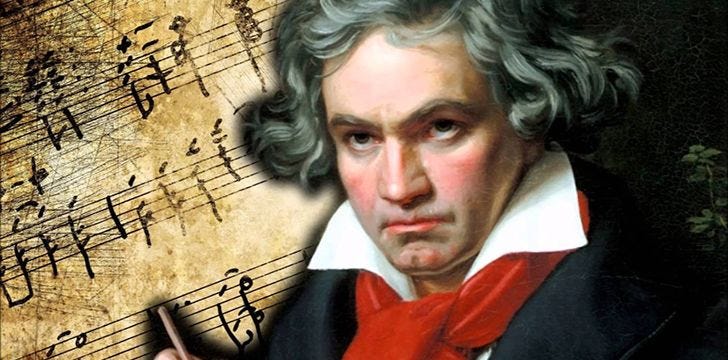
Two hundred fifty five years ago today, a boy was born who would reshape Western music. His name was Ludwig van Beethoven.
His father Johann, a mediocre court tenor with a growing fondness for drink, recognized talent in his son and drove him mercilessly. He would drag Beethoven from bed for midnight practice, punish him for wrong notes, as he hoped to manufacture another Mozart. It didn’t work. Young Ludwig was gifted, but no child prodigy. What he became was something different entirely.
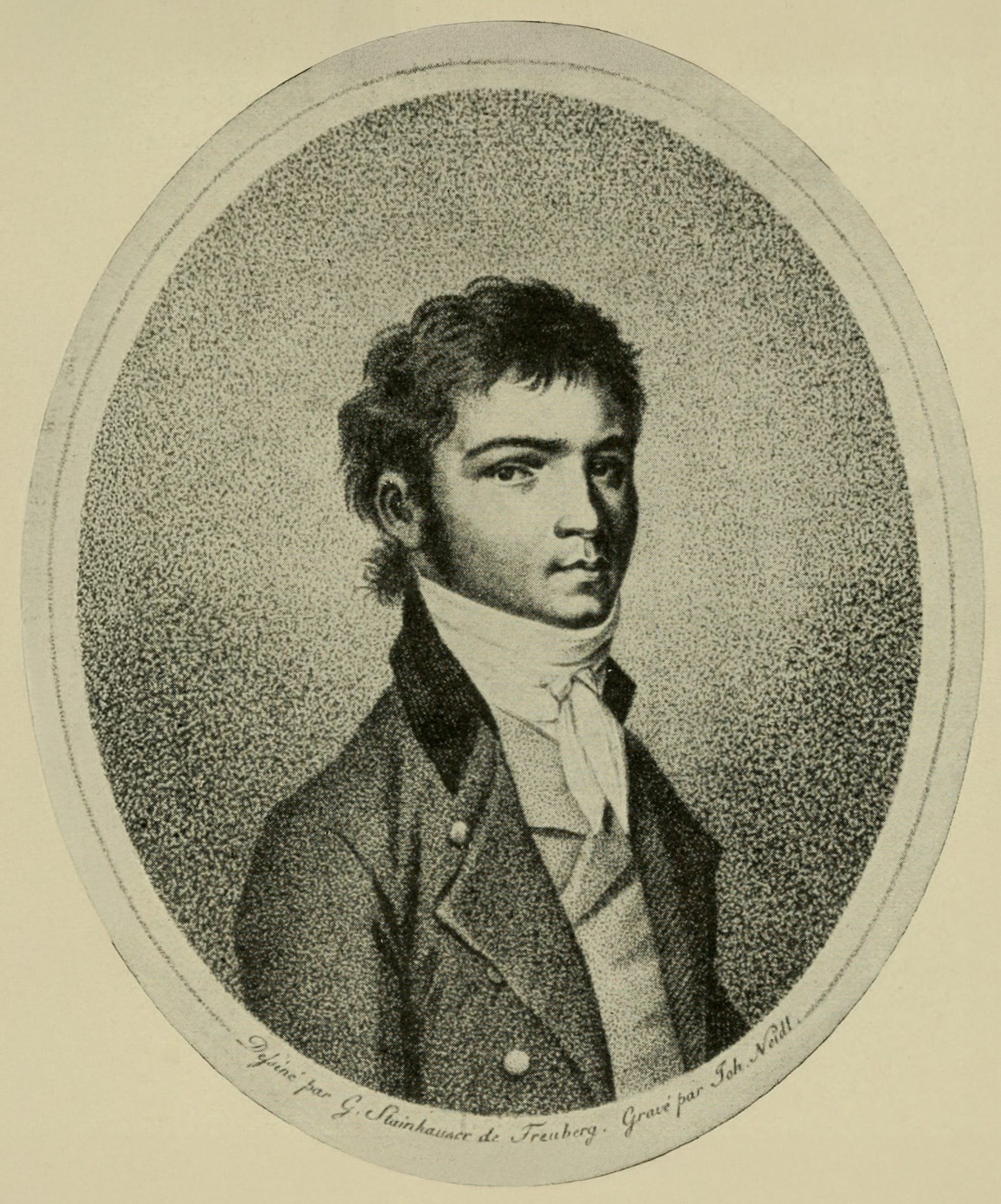
By twenty one, he had caught the attention of Joseph Haydn, the most celebrated composer in Europe. Beethoven left Bonn in November 1792 for Vienna. He never returned.
Vienna embraced him, first as a pianist of terrifying power, then as a composer of growing ambition. But Beethoven was no court servant. When Prince Lichnowsky demanded he perform for French officers, Beethoven stormed out and later wrote, “What you are, you are by circumstance and birth. What I am, I am through myself. Of princes there have been thousands. Of Beethoven there is only one.”
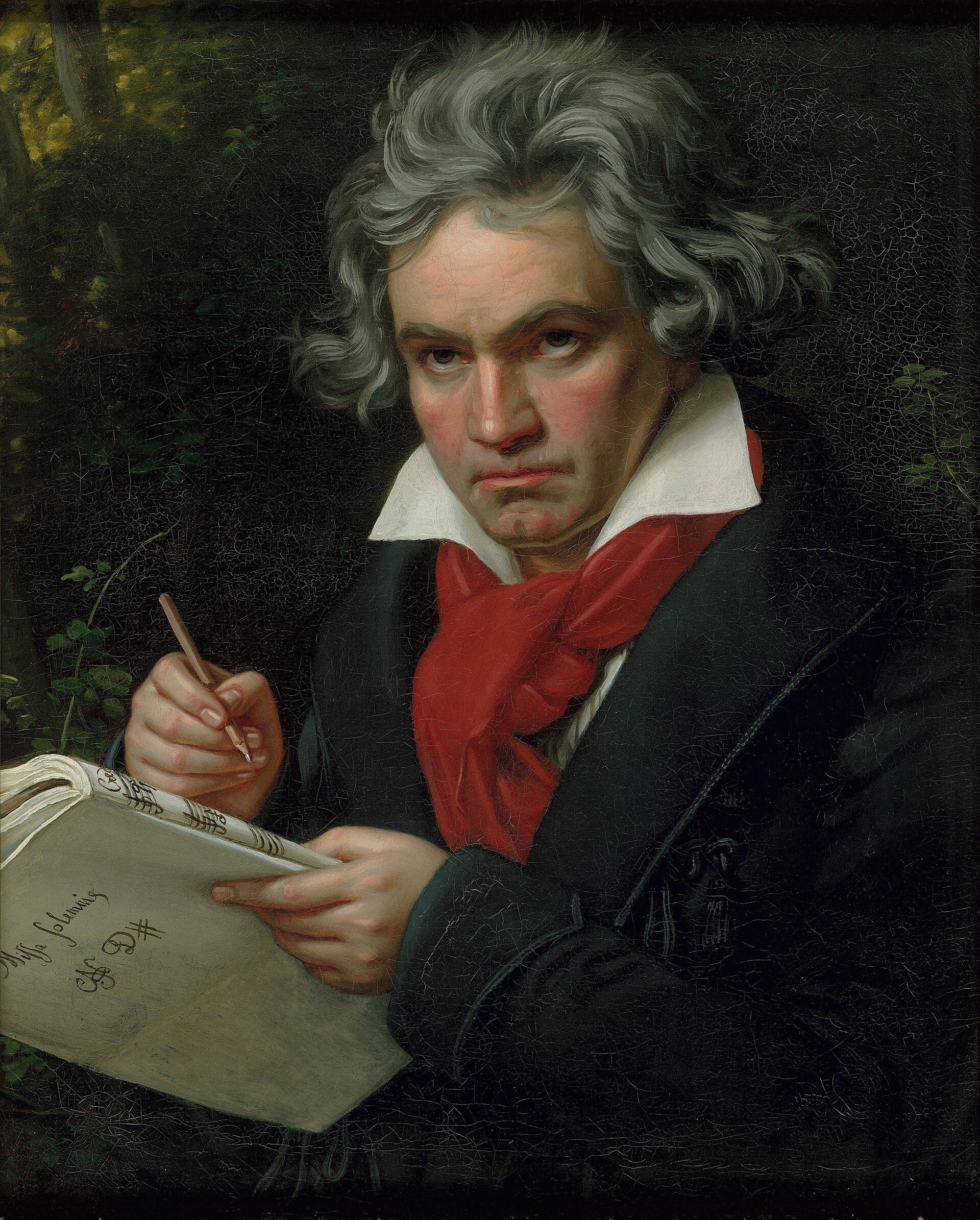
Then came the cruelest blow. Around 1796, Beethoven noticed a constant buzzing in his ears. For a musician, this was unthinkable. By 1802, in despair, he wrote a letter to his brothers that was never sent:
“What humiliation when someone near me heard a flute in the distance and I heard nothing... Such incidents drove me almost to despair, a little more and I would have ended my life—only my art prevented me. I couldn’t leave the world until I had produced all that I felt was within me.”
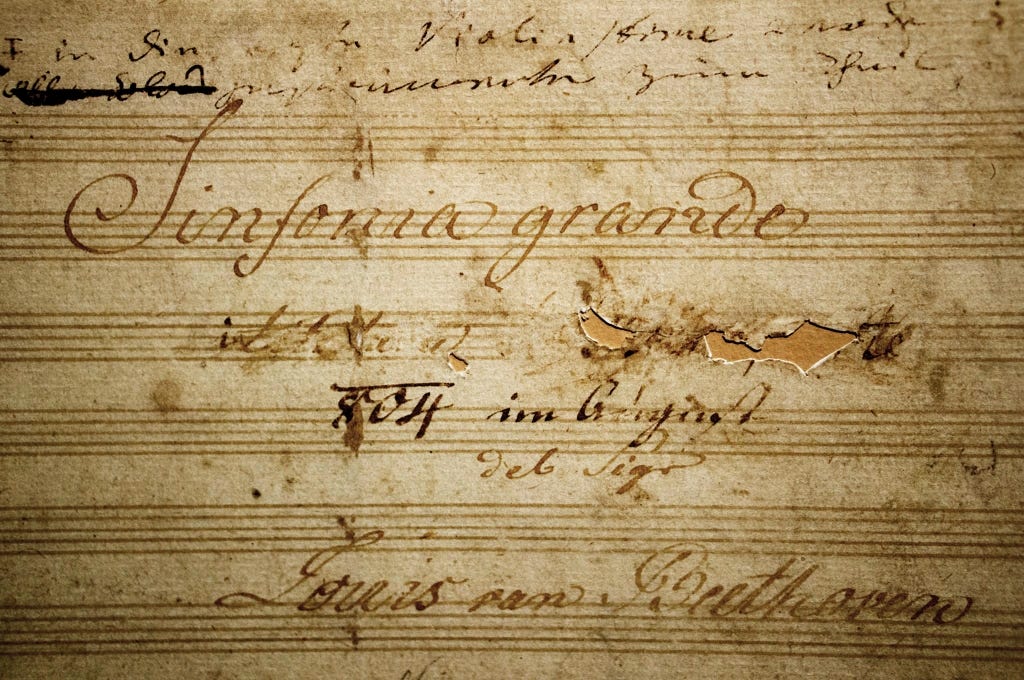
He returned to Vienna and began composing the “Eroica” Symphony. It was like no other and announced a new era in music.
By 1818, visitors had to write their questions in notebooks while he responded aloud. Yet his final years produced his most profound music. The Ninth Symphony, premiered in 1824, brought singers onto the symphonic stage for the first time, setting Schiller’s “Ode to Joy,” a vision of universal brotherhood now the anthem of the European Union.
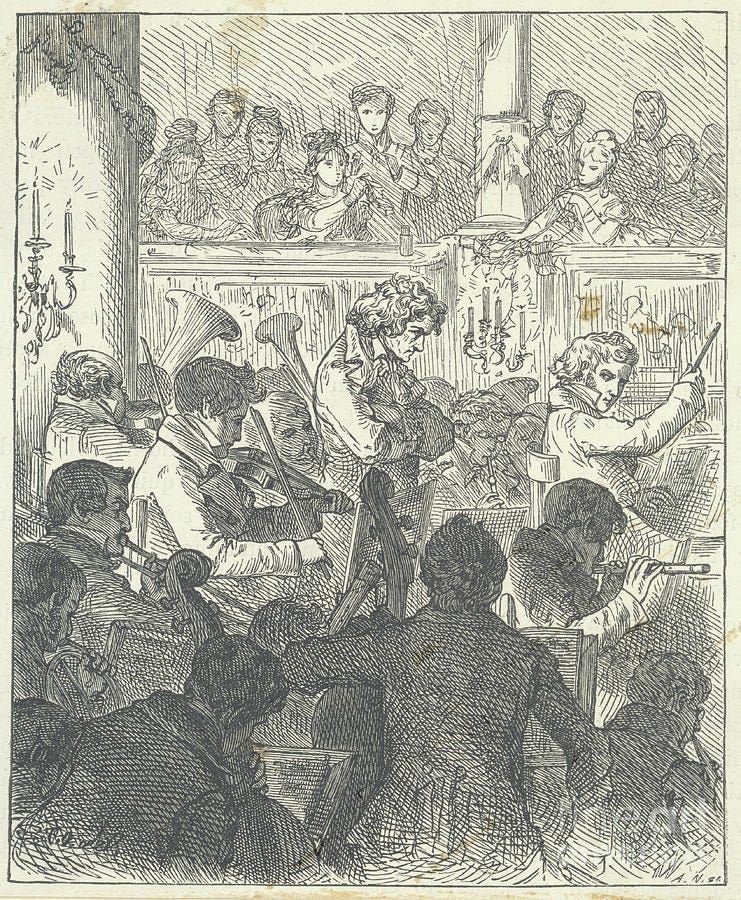
At that premiere, completely deaf, Beethoven stood on stage giving tempos while the actual conductor directed the orchestra to ignore him. When the music ended, he kept conducting, unaware it had stopped. The contralto Caroline Unger finally turned him around to see the audience on their feet.
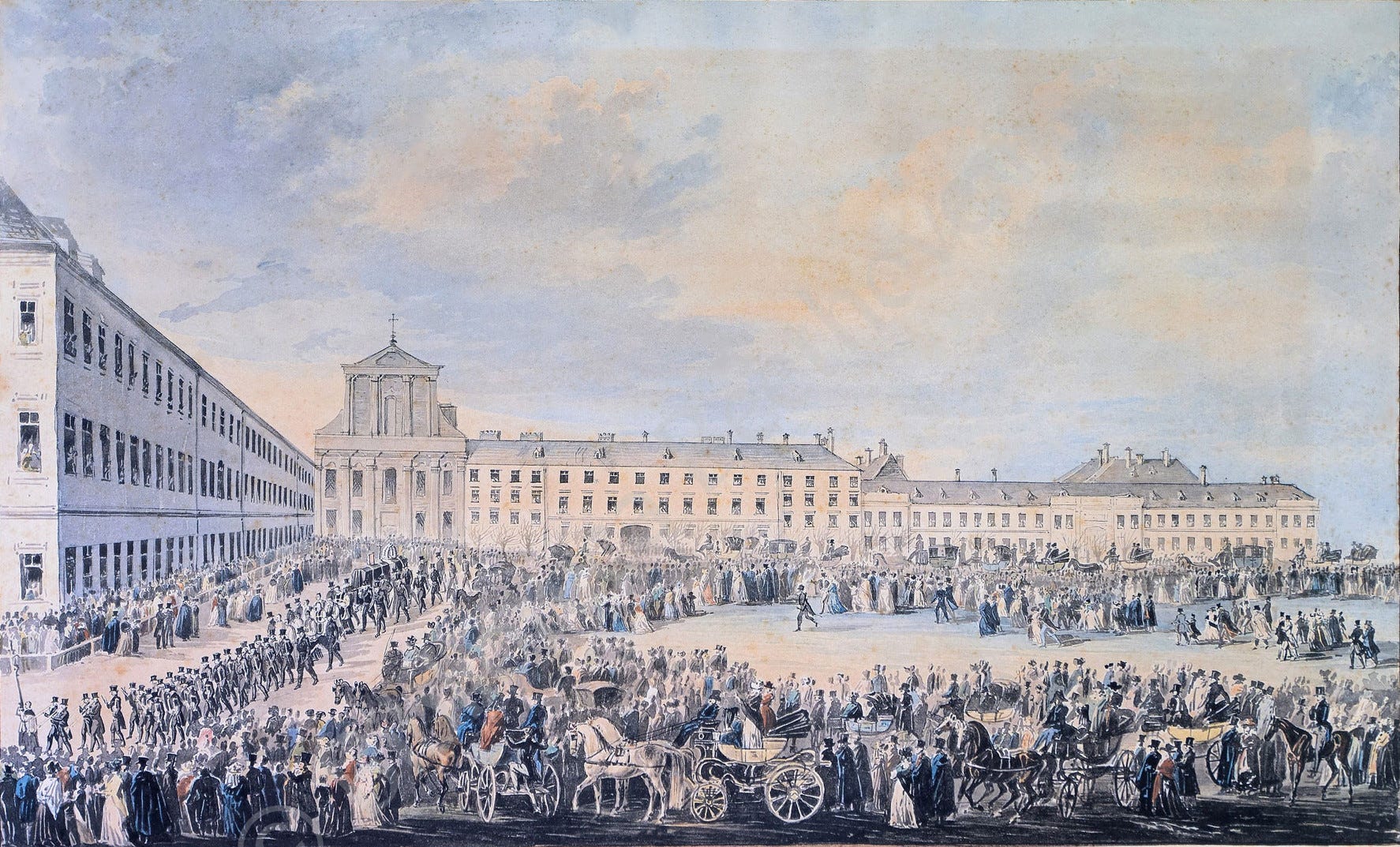
Beethoven died on March 26, 1827. An estimated 20,000 people lined Vienna’s streets for his funeral. Two centuries later, his music is performed somewhere in the world at virtually every moment.
A man who couldn’t hear his own masterpieces somehow composed music that still speaks to everyone.
Happy 255th birthday, Ludwig.