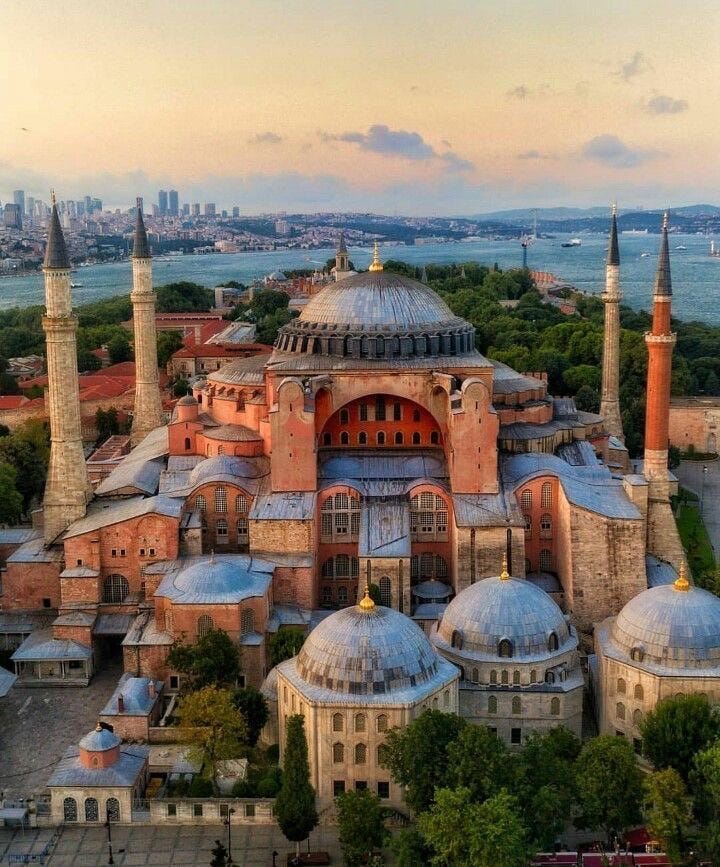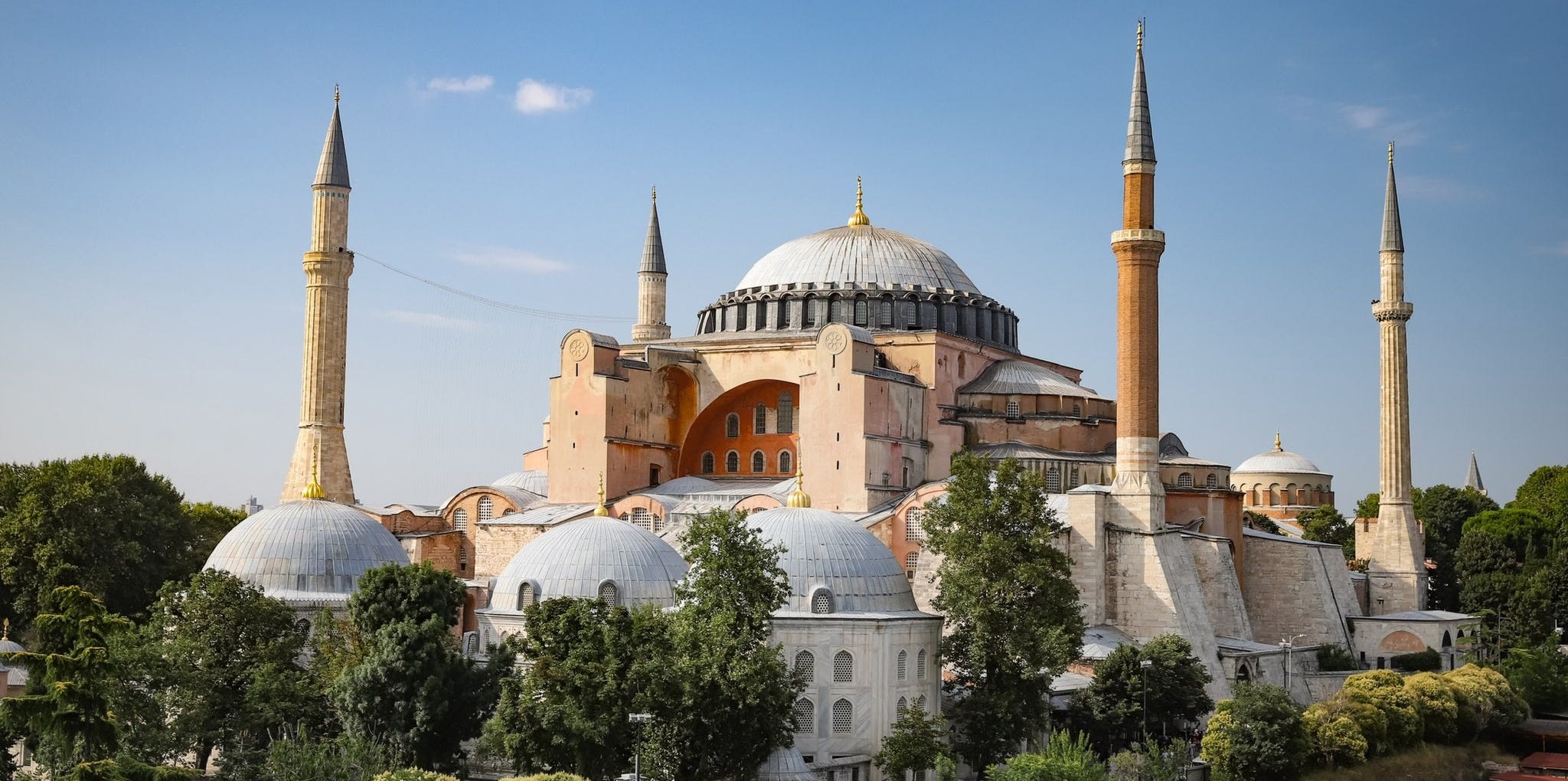
The Hagia Sophia we know today rose from literal ashes. In January 532 AD, the Nika Riots killed 30,000 people and burned half of Constantinople, including the church on this site. Emperor Justinian I saw opportunity in disaster. Within weeks, he commissioned two mathematician engineers to build something spectacular.
Five years later, Justinian walked into his completed church, gazed up at the massive dome, and reportedly declared: “Solomon, I have surpassed thee!” The Hagia Sophia would remain the world’s largest cathedral for the next thousand years.
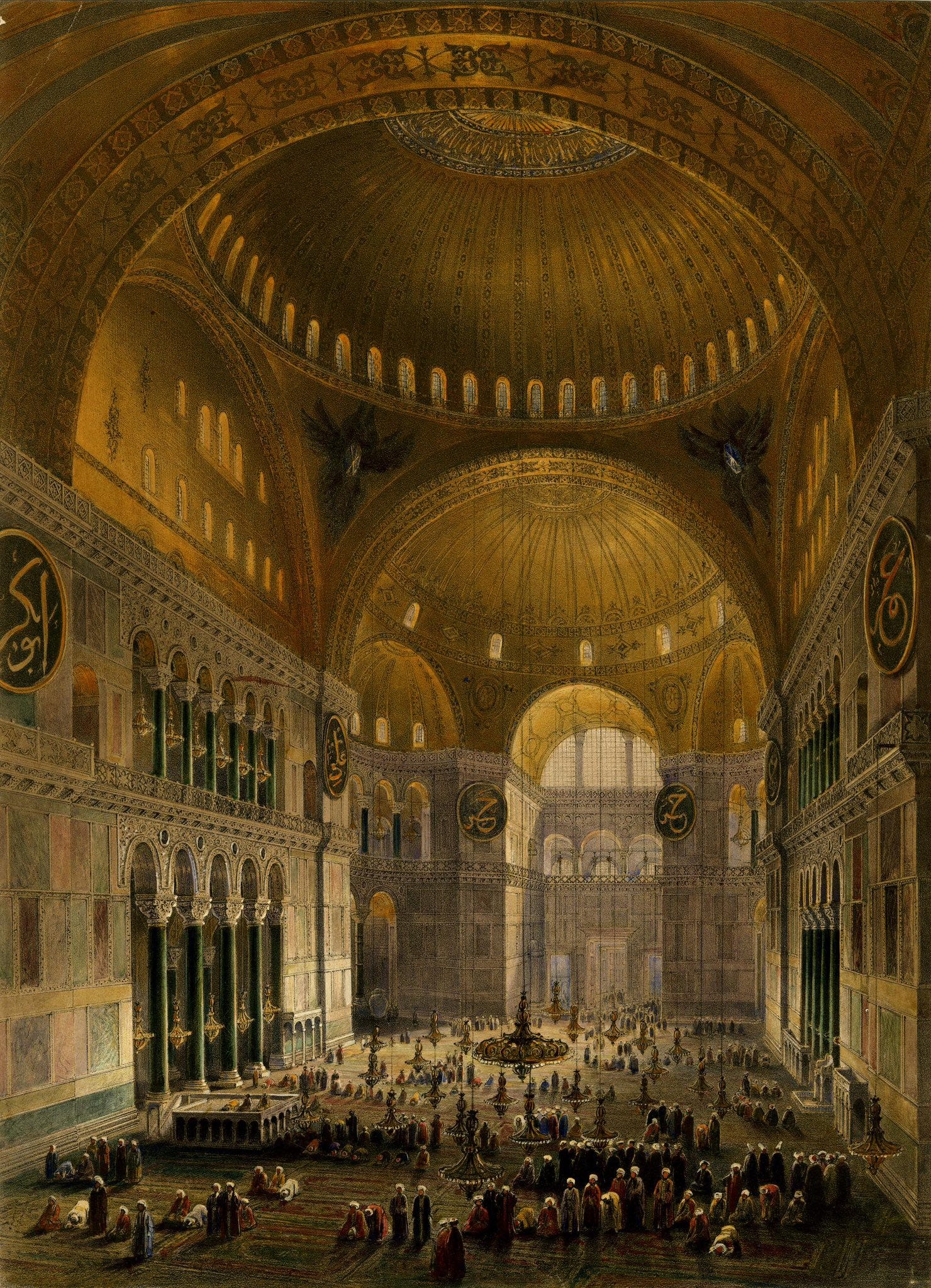
The engineering made it revolutionary. Prior to this, Romans could construct domes on circular buildings, but placing a circular dome over a rectangular space at this scale had never been done. The solution was to use curved triangular segments called pendentives which transferred the dome’s weight to four corner piers. Forty windows ringing the dome’s base created an effect one ancient historian described as a golden vault “suspended from the heavens.”
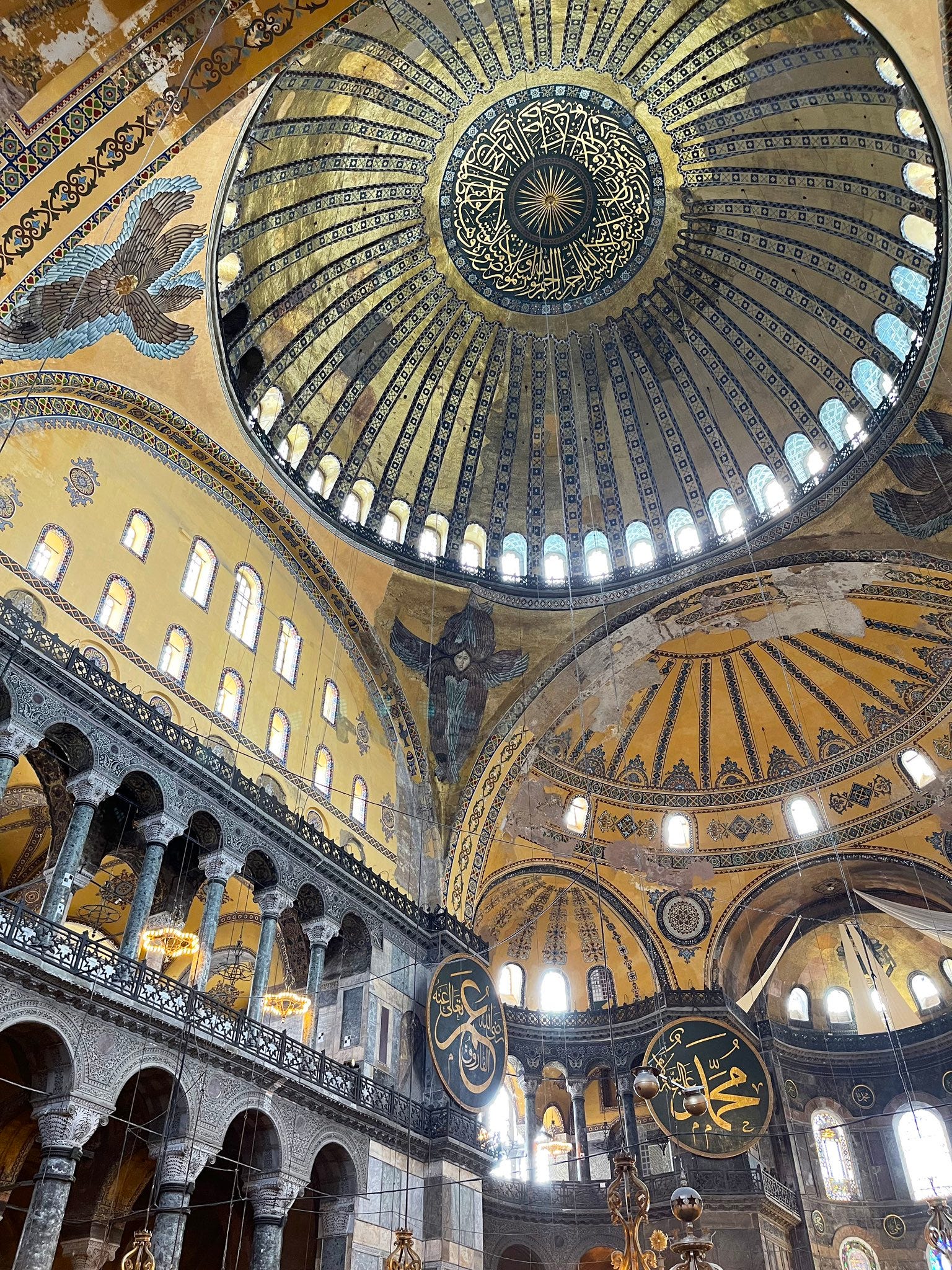
The original dome was too shallow and collapsed in 558. The rebuilt version was rededicated today in 562 AD, and it was raised 20 feet higher with structural ribs for stability. That’s the dome standing today.
For 916 years, the Hagia Sophia served as Eastern Orthodox Christianity’s greatest church. It hosted coronations, witnessed the Great Schism of 1054, and reportedly inspired Russia’s conversion to Christianity when Kiev’s emissaries visited in 987.
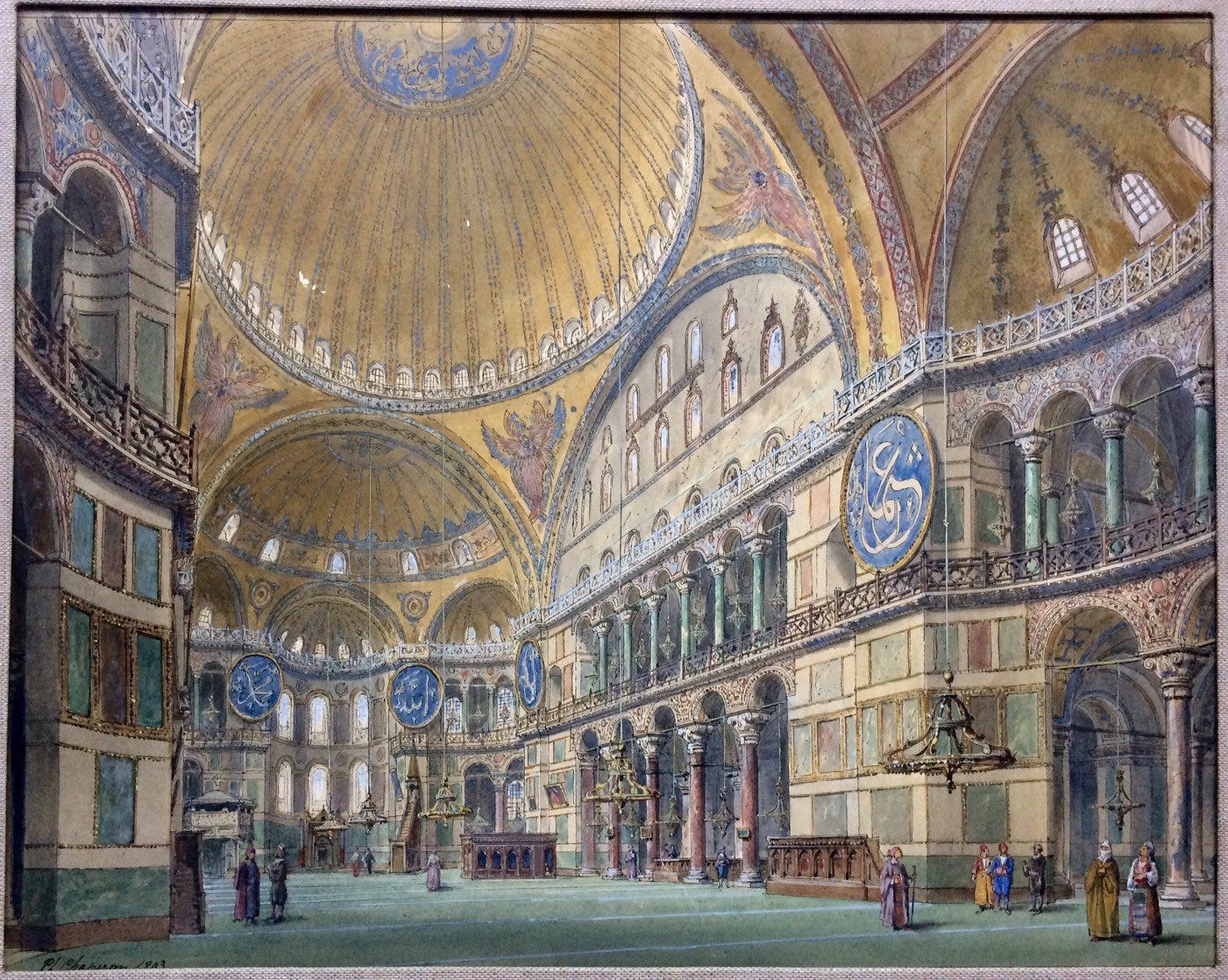
Then came May 29, 1453. Sultan Mehmed II’s forces breached Constantinople’s walls and ended the Byzantine Empire. Mehmed rode directly to the Hagia Sophia and converted it immediately. When a soldier tried to pry up floor tiles, Mehmed struck him. He would transform the building’s function but preserve its fabric.
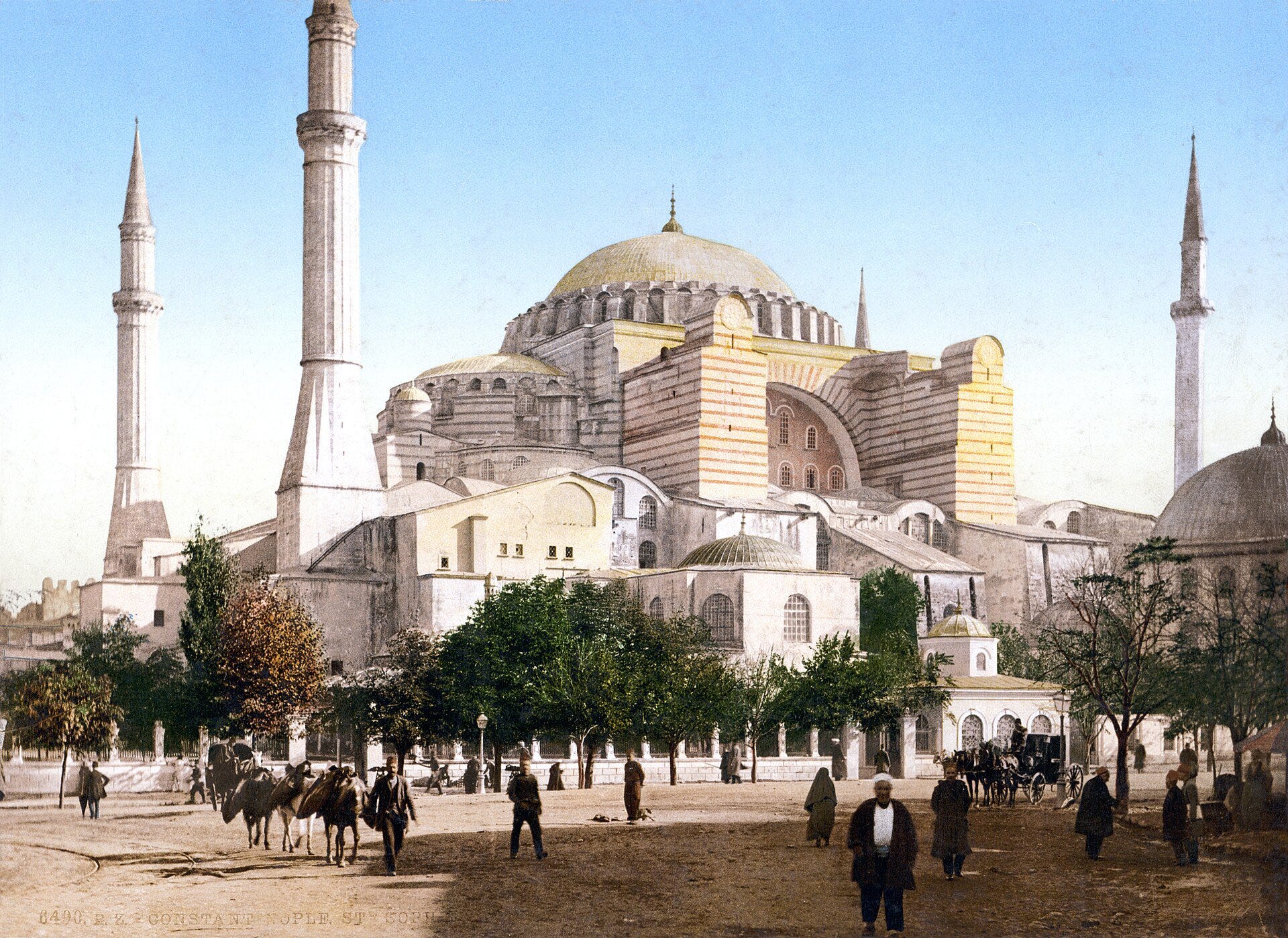
Over 481 years of Ottoman rule, the building gained four minarets, massive calligraphic medallions, and structural buttresses that engineers believe saved it from earthquake destruction. The Byzantine mosaics were also covered over with plaster.
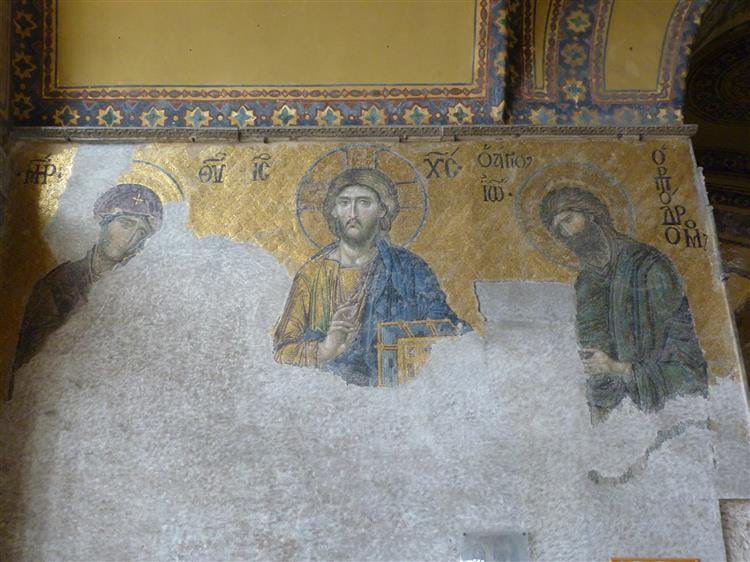
In 1934, Atatürk converted it to a museum. Scholars uncovered Byzantine mosaics hidden for 400 years. It became Turkey’s most visited site.
In July 2020, Turkey reopened it as a mosque. International reaction was largely critical. Today, tourists pay €25 and are restricted to the upper gallery while worshippers enter free below.
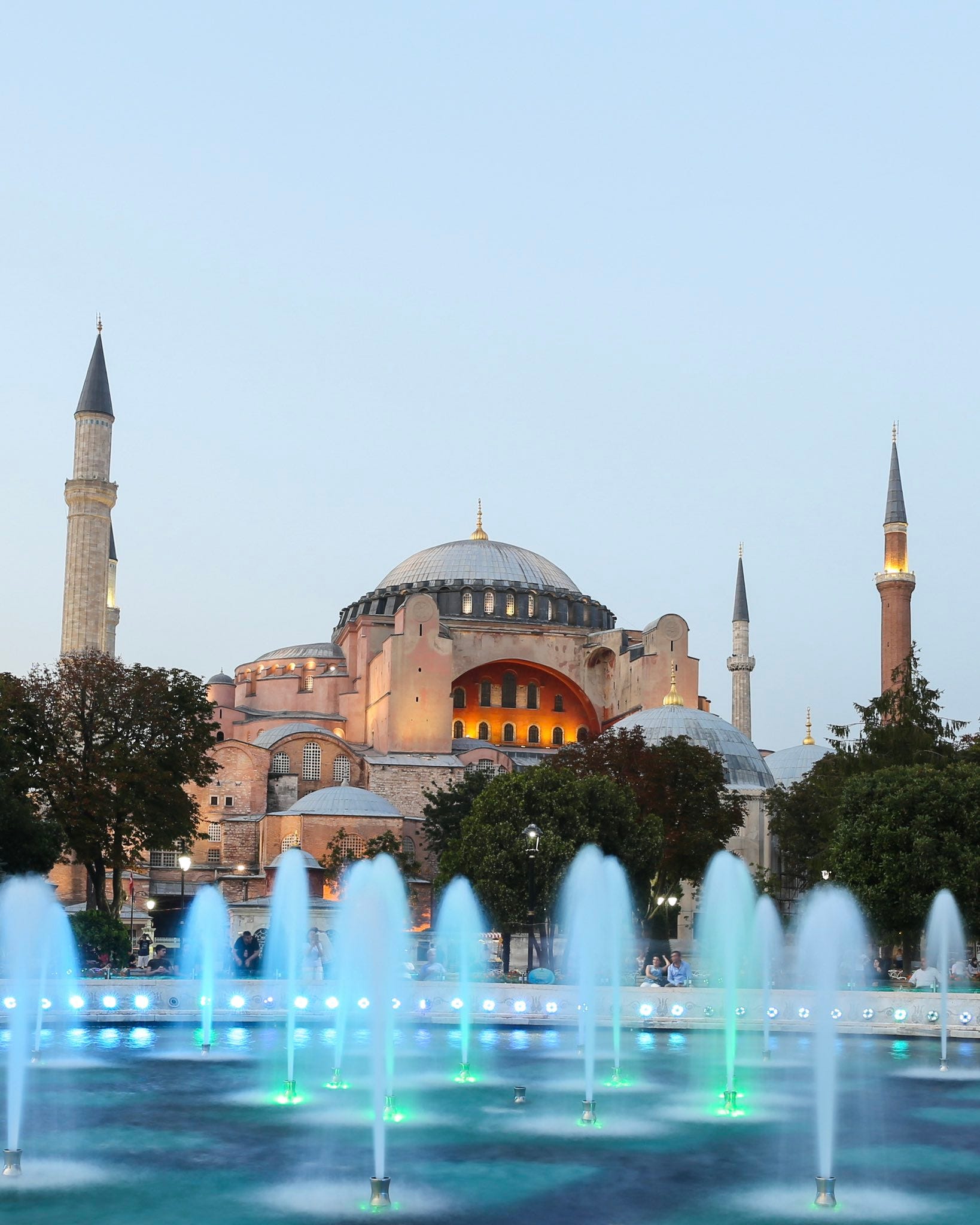
Empires rise and fall, but the Hagia Sophia remains. Byzantine mosaics still glimmer beneath Ottoman calligraphy. The same dome that watched Justinian’s coronation watched Mehmed’s conquest and Atatürk’s secularization. What will come next for the Hagia Sophia?