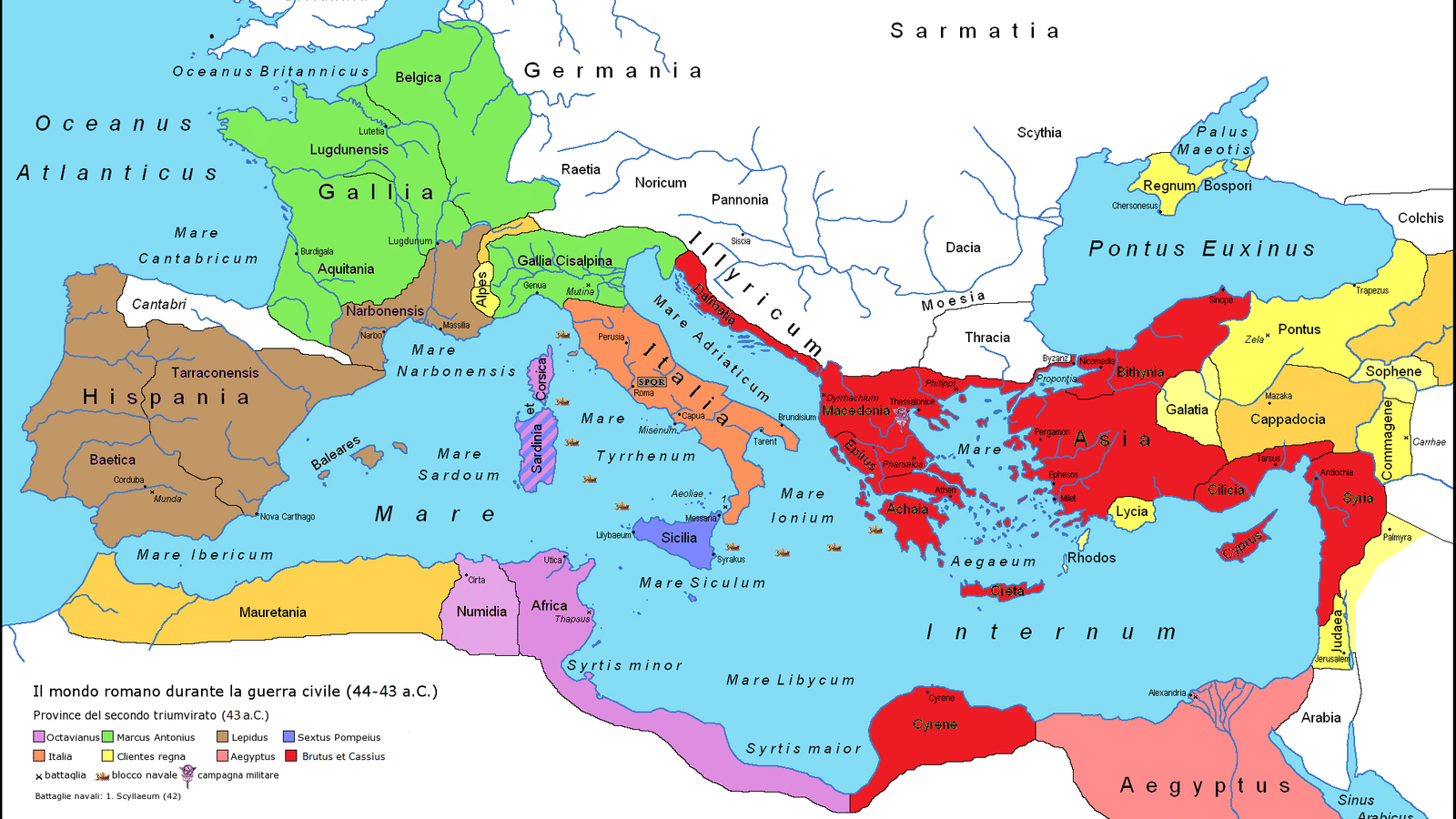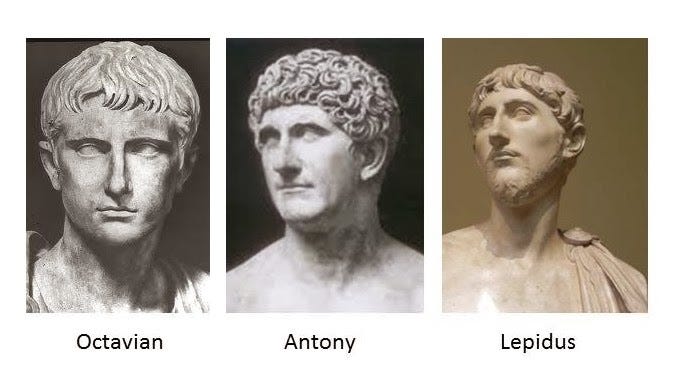
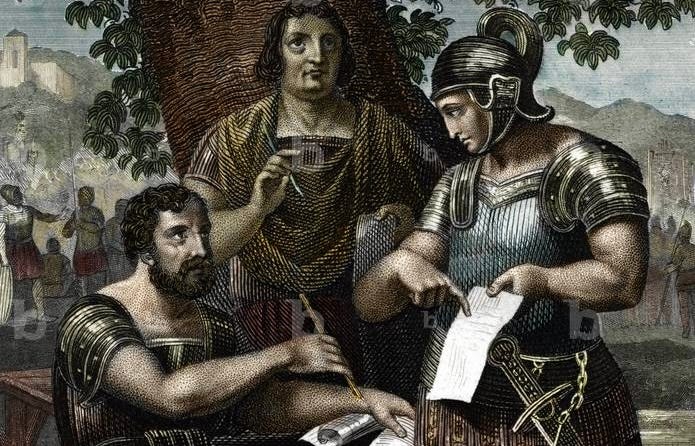
In October 43 BC, three Roman generals met on a small island in the Reno River near Bologna and negotiated the division of the Roman world. The agreement they reached, which was formalized today in 43 BC as an official magistracy, was the definitive end of republican government and set Rome on its path toward empire.
From Assassination to Alliance
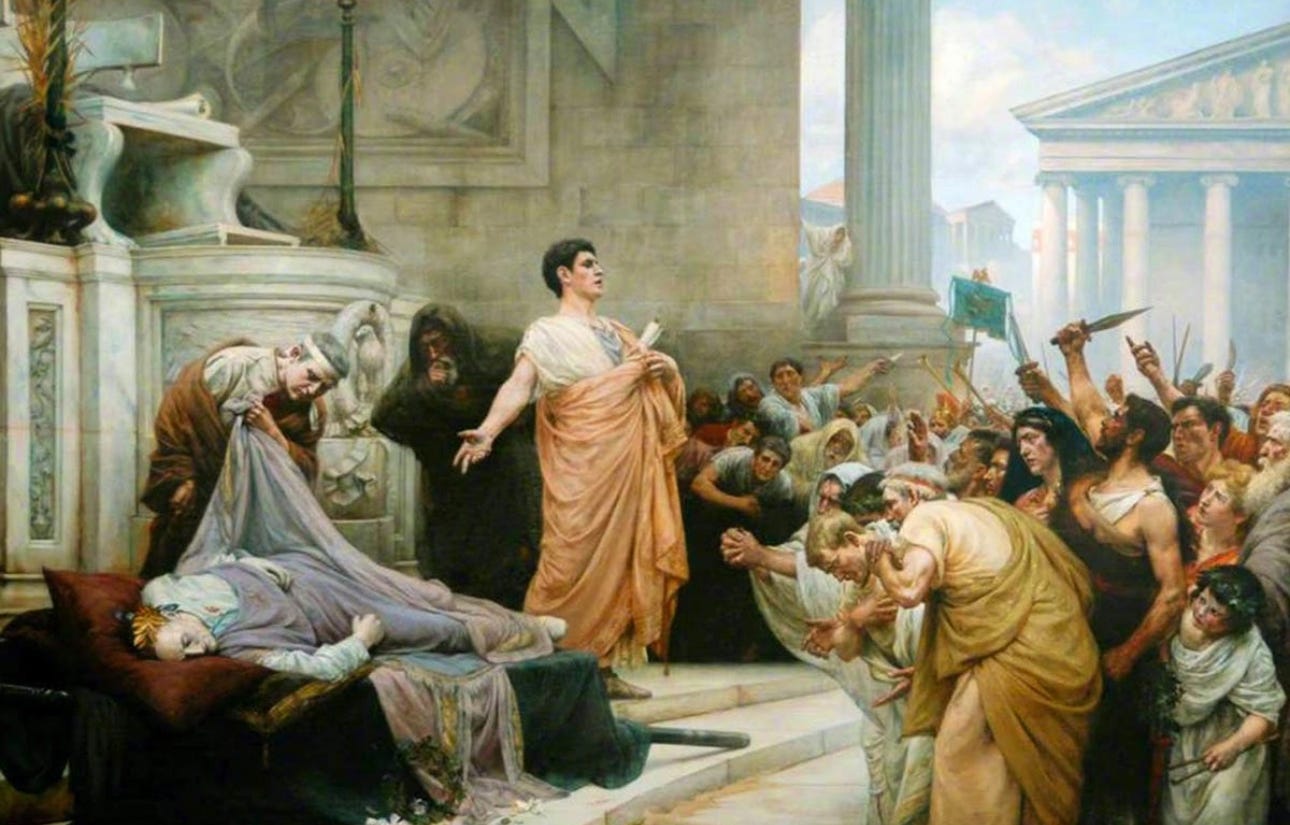
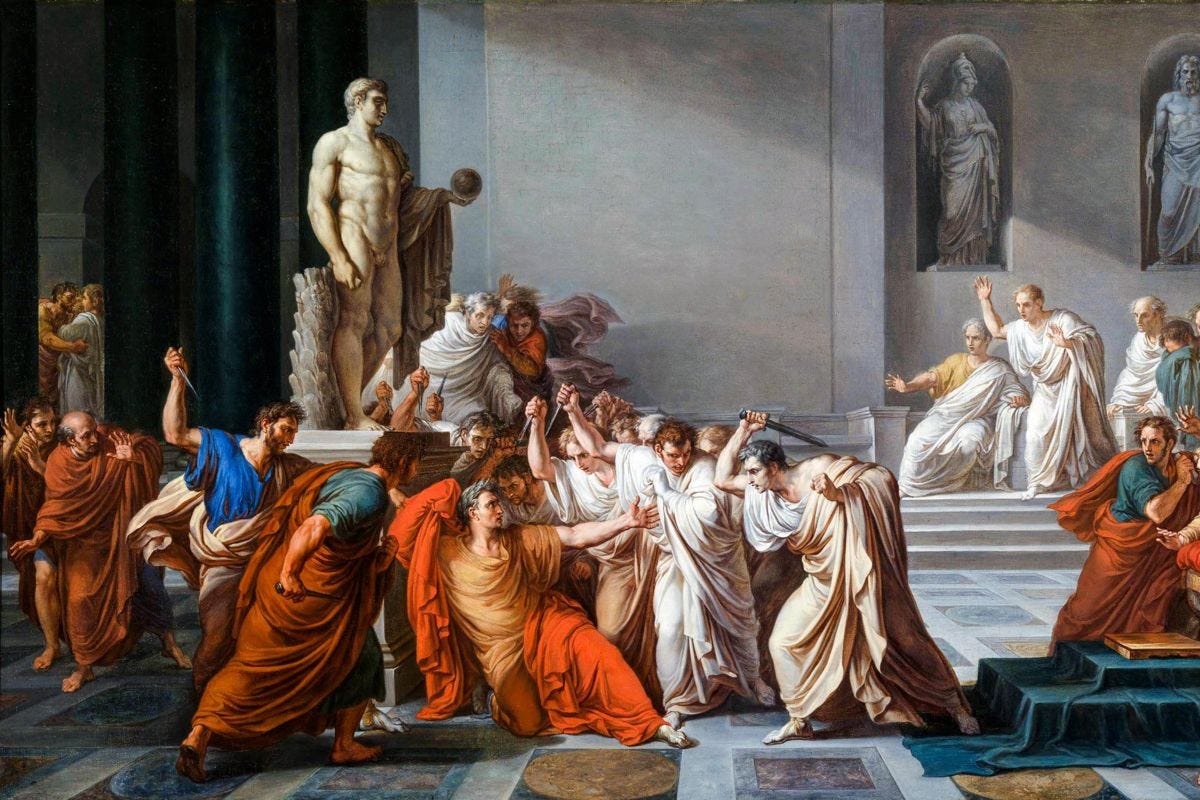
Julius Caesar’s assassination on March 15, 44 BC created an immediate power vacuum. The conspirators had planned the killing but not its aftermath, and Mark Antony’s inflammatory funeral speech turned public opinion decisively against them. Within weeks, Brutus and Cassius had fled Italy.
The year that followed saw constantly shifting alliances. By autumn 43 BC, three Caesarian generals had emerged with sufficient military strength to determine Rome’s future: Mark Antony, Caesar’s most experienced commander; the nineteen year old Octavian, Caesar’s adopted heir; and Marcus Aemilius Lepidus, who commanded seven legions.
The Conference at Bologna
The three men met on neutral ground, each accompanied by soldiers while their armies watched from opposite riverbanks. Over two days of negotiation, they divided the provinces among themselves. Antony received Gaul, Lepidus took Spain and southern Gaul, and Octavian, as junior partner, received Africa and the Mediterranean islands.
On November 26, 43 BC, the Lex Titia transformed their agreement into law. The three became “triumviri rei publicae constituendae” or triumvirs for reconstituting the republic. Their powers exceeded any previous Roman magistracy. They could legislate without Senate approval, appoint magistrates years in advance, and execute citizens without appeal. Unlike the informal alliance between Caesar, Pompey, and Crassus a generation earlier, this was a legally constituted office with dictatorial authority.
The Proscriptions
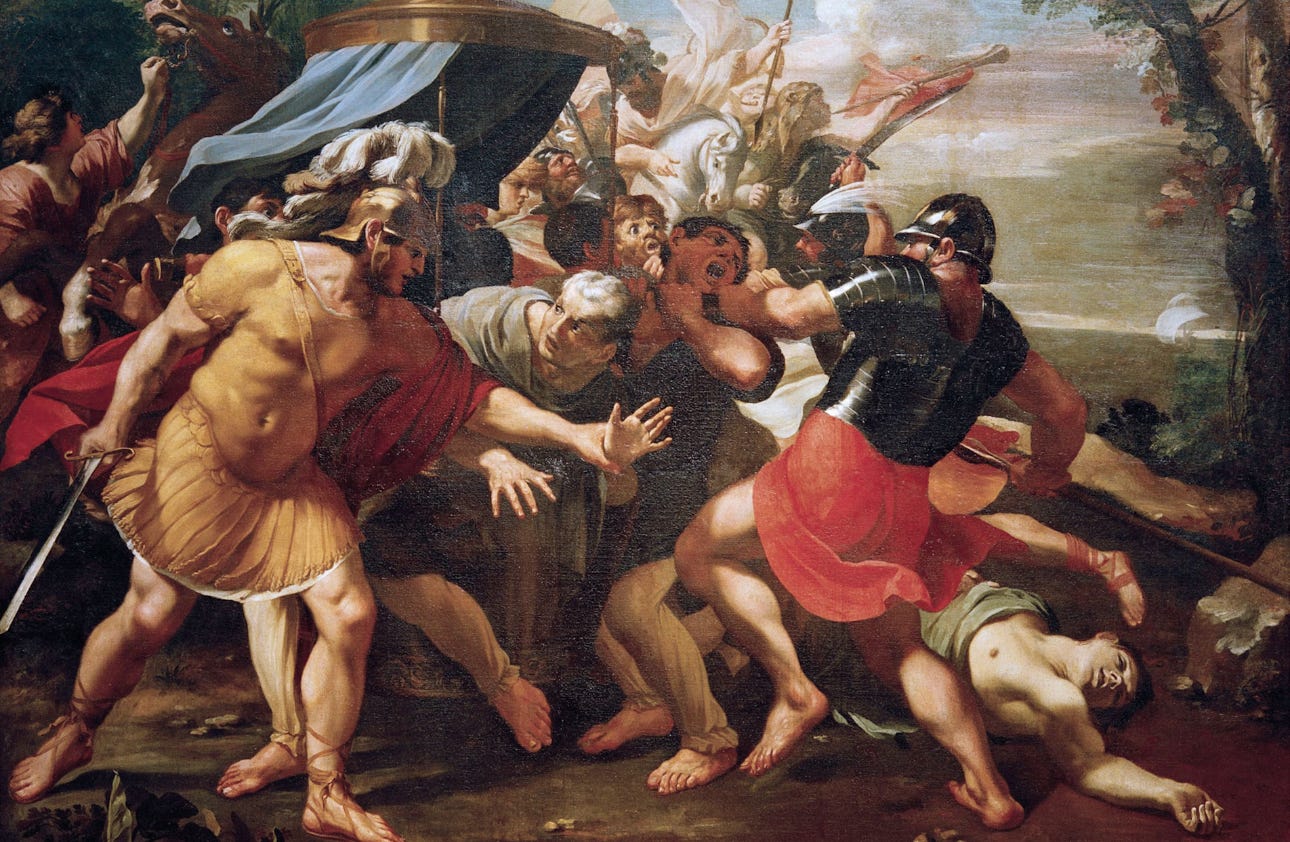
The triumvirs required funds to wage war against Caesar’s assassins in the East. Their solution was proscription. This was the public listing of enemies whose property was forfeit and whose deaths carried cash rewards. Approximately 300 senators and 2,000 equestrians were condemned.
The most prominent victim was Cicero, whose Philippic orations had nearly destroyed Antony politically. Despite Octavian’s reported objections, Antony insisted on his death. On December 7, 43 BC, soldiers overtook the sixty three year old orator near Formiae. His severed head and hands were displayed on the Rostra in the Forum, the platform where he had delivered his greatest speeches.
Legacy
The triumvirate achieved its immediate purpose. Brutus and Cassius were defeated at Philippi in 42 BC, but the alliance proved unstable. Lepidus was stripped of power in 36 BC, and Antony and Octavian’s rivalry culminated in the Battle of Actium in 31 BC.
The victor, Octavian, would formally “restore the Republic” in 27 BC and accept the title Augustus. Yet the constitutional framework of the triumvirate…supreme military command, authority over provinces, power to legislate by decree…provided the template for imperial rule. What began as a wartime alliance became the architecture of empire.